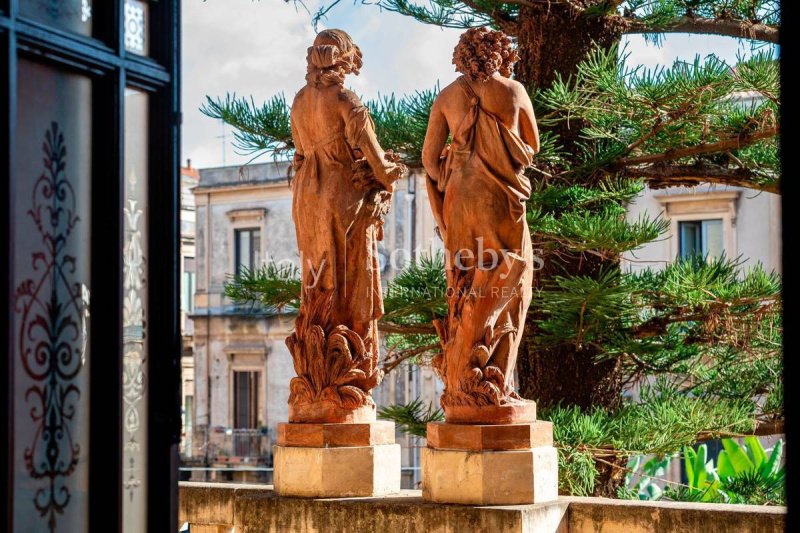
In the heart of Catania's historic centre, along Via Etnea, stands an exclusive building reminiscent of the Florentine Renaissance style. Commissioned in 1875 by the first owner to the Milanese architect Carlo Sada, the building has three façades, among which the main one stands out, overlooking Via Etnea and enriched with statues, terraces and an enchanting garden, and the internal one, characterised by a loggia with large arches.
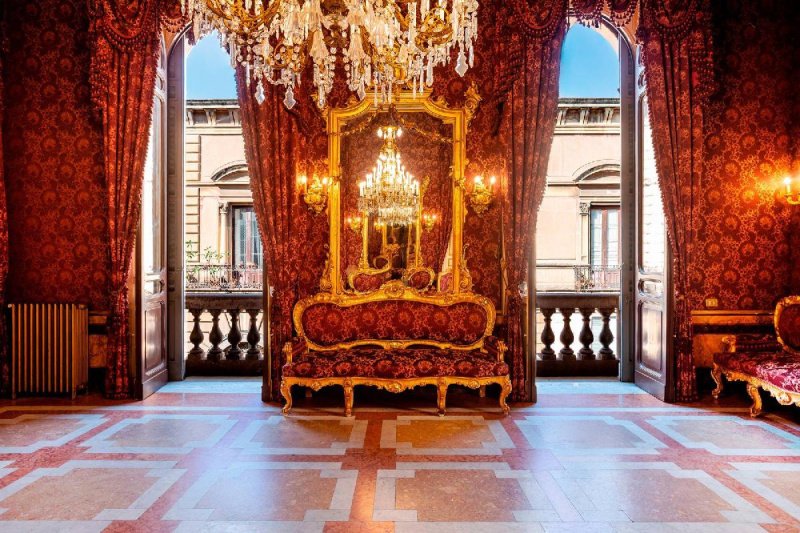
The main façade is distinguished by the use of rustication, which lends solemnity and harmony to the façade. Inside, the main floor has retained its original layout, with frescoes, stuccoes, gilding, tapestries and period furnishings. The building is spread over several levels connected by a spectacular three-flight staircase, richly decorated in neoclassical-Renaissance style and designed to highlight the family's wealth and impress guests. The rooms include numerous bedrooms, storage rooms, a cellar and, on the main floor, four particularly prestigious rooms: the Hall of Mirrors or Ballroom, with decorations in pure gold and glitter, an Art Nouveau ceiling and Rococo motifs depicting the birth and triumph of Venus or Flora; the Hall of Arts; the Music Room; and the Dining Room. All are decorated using the same technique, but with different subjects inspired by classical mythology. The bedroom also features a precious fresco on the ceiling depicting the allegory of sleep. The main floor has already been renovated and is ready to move into, the ground floor only needs some work, while the basement and second floor require more substantial work, offering the possibility of transforming the property into a prestigious accommodation facility.
Bright and with both pedestrian and vehicular access, the building has a lift, parking space and garage, and enjoys a strategic location just 15 minutes from Catania airport and about 10 minutes from the beaches and coast.
Taal van waaruit de automatische vertaling is gegenereerd
Nel cuore del centro storico di Catania, lungo via Etnea, sorge un palazzo esclusivo che richiama lo stile del Rinascimento fiorentino. Commissionato nel 1875 dal primo proprietario all'architetto milanese Carlo Sada, l'edificio presenta tre prospetti, tra cui spiccano quello principale, di rappresentanza, affacciato su via Etnea e arricchito da statue, terrazze e da un incantevole giardino, e quello interno, caratterizzato da un loggiato con ampie arcate.
Nel prospetto principale si distingue l'uso del bugnato, che conferisce solennità e armonia alla facciata. All'interno, il piano nobile ha conservato la configurazione originaria, mantenendo affreschi, stucchi, dorature, tappezzerie e arredi d'epoca. L'edificio si sviluppa su più livelli collegati da una scenografica scalinata di rappresentanza a tre rampe, riccamente decorata in stile neoclassico-rinascimentale e concepita per esaltare la ricchezza della famiglia e sorprendere gli ospiti. Gli ambienti comprendono numerose camere, depositi, una cantina e, al piano nobile, quattro sale di particolare pregio: il Salone degli Specchi o Sala delle Feste, con decorazioni in oro zecchino e porporina, soffitto in stile liberty e motivi rococò raffiguranti la nascita e il trionfo di Venere o Flora; la Sala delle Arti; la Sala della Musica; e la Sala da Pranzo. Tutte sono realizzate con la stessa tecnica decorativa, ma con soggetti diversi ispirati alla mitologia classica. Nella camera da letto si distingue inoltre un prezioso affresco sul soffitto che raffigura l'allegoria del sonno. Il piano nobile è già ristrutturato e abitabile, il piano terra necessita soltanto di alcuni interventi, mentre il piano interrato e il secondo piano richiedono lavori più consistenti, offrendo la possibilità di trasformare l'immobile in una prestigiosa struttura ricettiva.
Luminoso e dotato di accesso sia pedonale che carrabile, il palazzo dispone di ascensore, posto auto e garage, e gode di una posizione strategica a soli 15 minuti dall'aeroporto di Catania e a circa 10 minuti dai lidi e dalla costa.
Im Herzen der Altstadt von Catania, entlang der Via Etnea, erhebt sich ein exklusiver Palast, der an den Stil der florentinischen Renaissance erinnert. Er wurde 1875 vom ersten Eigentümer beim Mailänder Architekten Carlo Sada in Auftrag gegeben. Das Gebäude verfügt über drei Fassaden, von denen insbesondere die Hauptfassade an der Via Etnea hervorsticht - reich verziert mit Statuen, Terrassen und einem bezaubernden Garten - sowie die Innenfassade, die sich durch eine Loggia mit weiten Arkaden auszeichnet.
An der Hauptfassade fällt die Verwendung von Rustika hervor, die der Front Würde und Harmonie verleiht. Im Inneren hat das Piano Nobile seine ursprüngliche Raumaufteilung bewahrt und beherbergt noch heute Fresken, Stuckarbeiten, Vergoldungen, Wandbespannungen und Möbel aus der Epoche. Das Gebäude erstreckt sich über mehrere Ebenen, die durch eine repräsentative dreiläufige Prunktreppe miteinander verbunden sind. Diese ist reich im neoklassizistisch-renaissancezeitlichen Stil dekoriert und wurde konzipiert, um den Reichtum der Familie zu betonen und die Gäste zu beeindrucken.
Die Räumlichkeiten umfassen zahlreiche Zimmer, Lagerräume, einen Weinkeller und im Piano Nobile vier besonders wertvolle Säle: den Spiegelsaal oder Festsaal mit Dekorationen aus Blattgold und Bronzefarbe, einer Decke im Jugendstil und Rokokomotiven, die die Geburt und den Triumph der Venus oder Flora darstellen; den Saal der Künste; den Musiksaal; und das Speisezimmer. Alle Räume sind in derselben dekorativen Technik ausgeführt, jedoch mit unterschiedlichen, von der klassischen Mythologie inspirierten Themen. Im Schlafzimmer sticht zudem ein wertvolles Deckenfresko hervor, das die Allegorie des Schlafes zeigt.
Das Piano Nobile ist bereits renoviert und bewohnbar; das Erdgeschoss erfordert nur wenige Eingriffe, während das Untergeschoss und das zweite Obergeschoss umfassendere Arbeiten benötigen - eine Gelegenheit, die Immobilie in eine prestigeträchtige Beherbergungsstätte umzuwandeln.
Hell und sowohl zu Fuß als auch mit dem Auto zugänglich, verfügt der Palast über einen Aufzug, Stellplätze und eine Garage. Seine Lage ist strategisch günstig - nur 15 Minuten vom Flughafen Catania und etwa 10 Minuten von den Stränden und der Küste entfernt.
Au coeur du centre historique de Catane, le long de la Via Etnea, se dresse un bâtiment d'exception rappelant le style de la Renaissance florentine. Commandé en 1875 par son premier propriétaire à l'architecte milanais Carlo Sada, l'édifice présente trois façades, dont la principale, donnant sur la Via Etnea, se distingue par ses statues, ses terrasses et un jardin enchanteur, tandis que la façade intérieure se caractérise par une loggia ornée de grandes arches.
La façade principale se distingue par l'usage du bossage, qui confère à l'ensemble solennité et harmonie. À l'intérieur, l'étage noble a conservé sa disposition d'origine, avec ses fresques, stucs, dorures, tentures et meubles d'époque. Le bâtiment s'élève sur plusieurs niveaux reliés par un spectaculaire escalier à trois volées, richement décoré dans un style néoclassique-renaissance, conçu pour mettre en valeur la richesse de la famille et impressionner les invités.
Les pièces comprennent de nombreuses chambres, des espaces de rangement, une cave et, à l'étage noble, quatre salons particulièrement prestigieux: la Salle des Miroirs ou Salle de Bal, décorée d'or pur et de paillettes, avec un plafond Art nouveau et des motifs rococo représentant la naissance et le triomphe de Vénus ou de Flore; la Salle des Arts; le Salon de Musique; et la Salle à Manger. Toutes sont décorées selon la même technique, mais avec des sujets différents inspirés de la mythologie classique. La chambre principale présente également une précieuse fresque au plafond représentant l'allégorie du sommeil.
L'étage noble a déjà été restauré et est prêt à être habité; le rez-de-chaussée nécessite seulement quelques travaux, tandis que le sous-sol et le deuxième étage demandent une rénovation plus importante, offrant la possibilité de transformer la propriété en un prestigieux établissement d'hébergement.
Luminosité, accès piéton et véhicule, ascenseur, places de stationnement et garage: autant d'atouts auxquels s'ajoute un emplacement stratégique, à seulement 15 minutes de l'aéroport de Catane et à environ 10 minutes des plages et de la côte.